Wondering if custom swimwear is worth it? Compare custom vs off-the-rack swimsuits to discover how precise measurements bring a superior fit, comfort, and luxury.
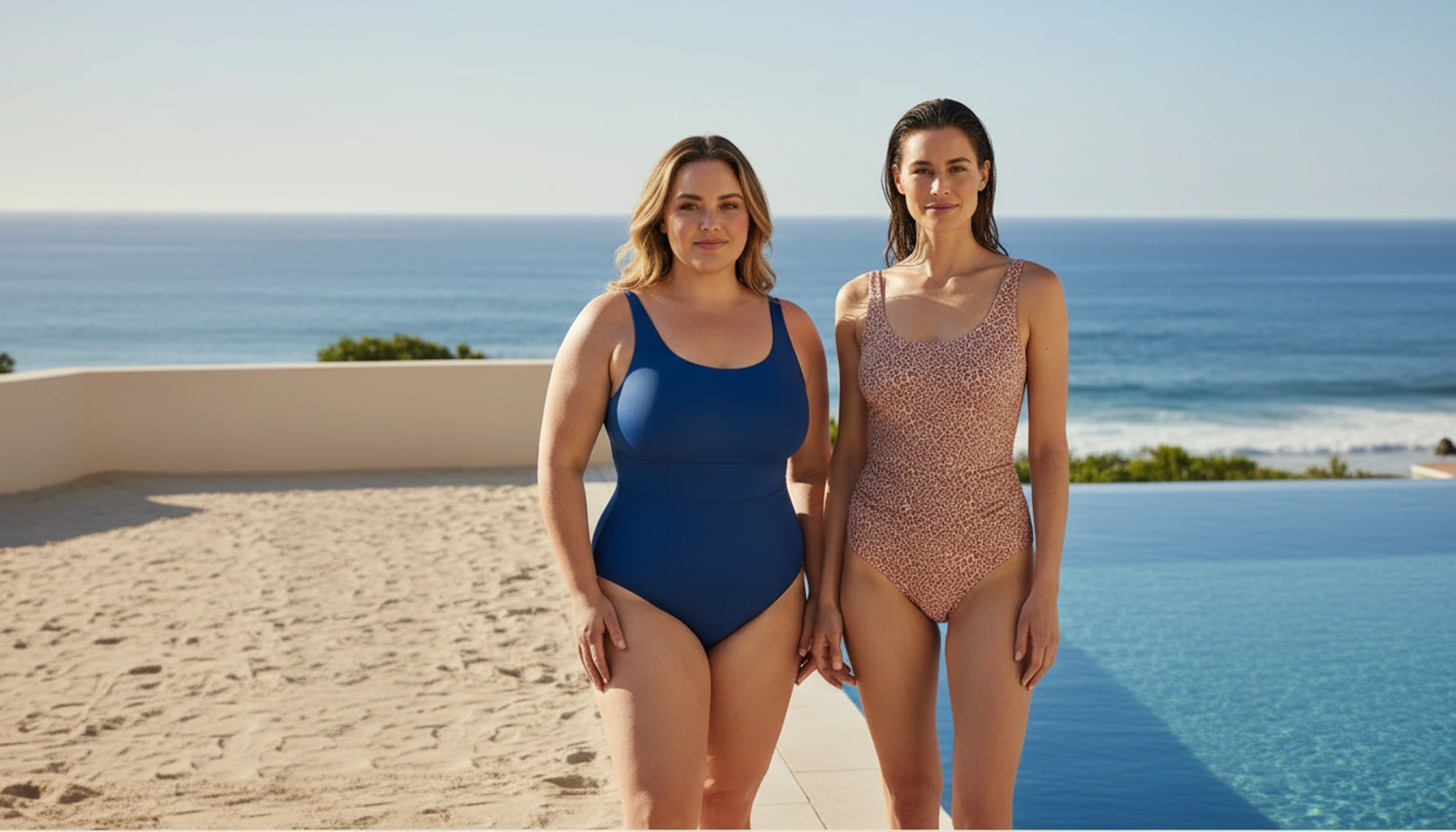
Swimwear Fit Guide
Wondering if custom swimwear is worth it? The right choice depends on your proportions, comfort priorities, budget, and how often you plan to wear the suit. Off-the-rack swimwear is convenient and affordable, while made-to-measure swimwear uses your measurements to refine key areas such as bust support, torso length, rise, leg opening, and overall coverage. For people who regularly struggle with gaping, digging, slipping, or inconsistent sizing, a custom fit can provide a meaningful improvement in comfort and confidence. For occasional wear or a quick seasonal update, standard sizing may be the more practical option.
The Short Answer: Is Custom Swimwear Worth It?
Custom swimwear is usually worth considering when a standard size fits one part of your body but fails somewhere else. A made-to-measure swimsuit can reduce common fit problems by adjusting the pattern to your actual measurements rather than asking your body to conform to a fixed size chart. This is particularly useful for bodies with a longer or shorter torso, a fuller bust, a smaller waist relative to the hips, asymmetry, or specific coverage and support needs.
However, custom does not automatically mean better for every situation. Off-the-rack swimwear may be the better choice when speed, low upfront cost, broad availability, or frequent style changes matter most. The most useful decision is not “Which category is superior?” but “Which option solves my specific fit problem at a reasonable total cost?”
What Do “Custom” and “Off-the-Rack” Mean?
Off-the-rack swimwear is produced in a set range of standard sizes. Each size is based on a predefined set of body measurements and a particular fit model. The garment can still be well designed, but its proportions are fixed once it reaches the rack or online store.
Made-to-measure swimwear begins with your measurements. The design is then selected or adjusted around those measurements, often with additional choices for coverage, straps, leg line, neckline, lining, and support. It is different from fully bespoke design, in which the entire garment may be drafted from scratch with extensive fittings. Many consumers use “custom” to describe a practical made-to-measure process rather than couture-level tailoring.
Key distinction between standard sizing and made-to-measure sizing | ||
Factor | Off-the-rack swimwear | Made-to-measure swimwear |
|---|---|---|
Starting point | Predefined size chart | Your personal measurements |
Proportions | Fixed within each size | Adjusted to your body shape |
Choice | Limited to available styles and sizes | More control over fit and design details |
Shopping speed | Usually immediate | Requires measurement and production time |
Best for | Convenience, exploration, and budget control | Persistent fit issues and a more individual fit |
Why Fit Is More Complicated in Swimwear
A swimsuit is a close-fitting, stretch-based garment. Its fit depends on more than bust, waist, and hip circumference. Torso length, vertical rise, breast position, shoulder slope, and the relationship between compression and stretch all influence how the suit behaves in water and during movement.
For example, a one-piece can match your bust and hip measurements yet still pull at the shoulders if your torso is longer than the size chart’s fit model. A bikini bottom can match your hip measurement but gape at the waist if the waist-to-hip ratio differs from the pattern. A suit that is too short may create pressure, while one that is too long may wrinkle, shift, or lose support.
Fabric also matters. Swim fabrics are designed to stretch and recover, but stretch is not a substitute for correct proportions. A suit should feel secure without creating sharp pressure points. The goal is controlled ease: enough tension to hold the garment in place, but not so much that the lining, elastic, or fabric is working beyond its comfortable range.
The Main Benefits of Custom Swimsuits
1. A more balanced fit
The most direct benefit of made-to-measure swimwear is that separate dimensions can be considered together. Instead of choosing one size for your largest measurement and accepting excess fabric elsewhere, the garment can be planned around your full proportion profile.
2. Better comfort during movement
Swimming, walking, paddleboarding, and beach activities expose fit problems quickly. A well-balanced suit is less likely to ride up, twist, or create pressure when you move. Comfort is not simply a softer fabric; it is the result of correct tension, seam placement, support, and coverage working as a system.
3. More intentional support and coverage
Custom options can make it easier to specify the level of support and coverage you actually want. Depending on the design, this may include a higher back, wider straps, a different leg opening, a more secure neckline, or a lining arrangement that feels more stable. These details should be selected for your activity and comfort preferences rather than treated as purely decorative choices.
4. Fewer compromises for hard-to-fit proportions
People who are between sizes or who have distinct proportions often spend more time returning and replacing standard swimsuits. A made-to-measure option can reduce that compromise. It is especially relevant when the same fit issue appears repeatedly across different brands and silhouettes.
5. A longer relationship with one garment
A swimsuit that fits well is more likely to be worn often and cared for properly. That can make its value feel different from the purchase price alone. The practical test is cost per comfortable wear: divide the total cost by the number of occasions on which you expect to reach for the suit.
When Off-the-Rack Swimwear Makes More Sense
Standard sizing remains a strong option when the available size chart already matches your proportions. It is also useful when you need a swimsuit quickly, want to compare several silhouettes, or are still learning which necklines, rises, and coverage levels suit you.
Off-the-rack swimwear can be more economical for occasional use. It also makes experimentation easier because you can try a new color or shape without committing to a made-to-measure process. If your main concern is style discovery rather than fit correction, standard sizing may provide enough value.
The key is to use the brand’s actual measurement chart rather than relying on a familiar letter or number. Sizes are not universal. Compare your measurements with the chart, check the garment’s coverage and stretch notes, and review the return policy before purchasing.
Custom Fit vs Standard Size Swimsuit: Side-by-Side Comparison
Decision factors for choosing between custom and off-the-rack swimwear | ||
Decision factor | Choose off-the-rack when… | Consider made-to-measure when… |
|---|---|---|
Fit | A standard size fits your bust, waist, hips, and torso comfortably. | You regularly size up or down to solve one isolated fit problem. |
Budget | You need a lower upfront price or a short-term option. | You value repeated wear and want to reduce costly trial and error. |
Timing | You need a suit immediately for a trip or event. | You can allow time for measurements, production, and review. |
Support | Available straps, cups, and lining provide enough security. | You need more specific support, coverage, or strap placement. |
Style | You enjoy seasonal variety and easy replacement. | You want a considered design with fewer compromises. |
Sustainability | You can select durable fabric and wear the item frequently. | A better fit will help you keep and use the garment longer. |
A Simple Framework for Making the Decision
Use the following four-question framework before you buy:
Does your current size solve the largest fit problem? If the answer is no, identify whether the issue is length, circumference, support, or coverage.
How often will you wear the swimsuit? Frequent wear increases the value of comfort and reliable fit.
What is your real deadline? A custom process is only practical if you have enough time for accurate measurements and production.
What would make you return a standard suit? If the same reason has appeared several times, made-to-measure may address the underlying issue more directly.
A useful value calculation is:
Value per comfortable wear = total purchase cost ÷ expected comfortable wears.
This is not a financial guarantee. It is a way to compare a lower-priced suit that may be worn rarely with a higher-priced suit that becomes a dependable part of your wardrobe.
How to Prepare for Made-to-Measure Swimwear
Accurate measurements are the foundation of a good result. Measure over lightweight underwear or a thin layer, keep the tape level, and avoid pulling it tight. Stand naturally instead of holding your body in a pose. If possible, ask another person to help with vertical measurements such as torso length.
Record the measurements requested by the design system, which may include bust, underbust, waist, high hip, full hip, torso length, and preferred coverage. Also note fit preferences in plain language: “secure for lap swimming,” “higher rise,” or “less compression at the waist.” These details add context that numbers alone cannot provide.
Finally, check how the process handles measurement changes, fit questions, and care. A clear measurement guide and transparent expectations are part of the product experience, not administrative details.
Common Mistakes to Avoid
Do not choose a standard size based only on your largest measurement. That can create excess fabric in other areas and does not reveal whether the torso or rise is correct. Do not assume that tighter means more supportive; excessive tension can reduce comfort and place unnecessary stress on seams and elastic.
With custom swimwear, avoid taking measurements over bulky clothing or immediately after a workout. Do not round measurements casually, and do not omit fit preferences because they seem subjective. Comfort, coverage, and activity level are important design inputs.
For either option, follow the care label. Rinse swimwear after exposure to salt water or chlorine, avoid harsh abrasion, and dry it away from prolonged high heat. Care habits affect fabric recovery and the useful life of the garment.
Frequently Asked Questions
Is custom swimwear worth it for a small size difference?
It can be, especially if the small difference causes gaping, slipping, pressure, or repeated returns. The value depends less on the size of the measurement difference and more on whether the issue affects comfort and wearability.
Is made-to-measure swimwear more flattering?
A better fit can create a cleaner line because the fabric lies in the intended position. “Flattering” is personal, however. The most useful standard is whether the suit supports your body, stays in place, and gives you the coverage and silhouette you prefer.
Can custom swimwear be used for swimming, not just lounging?
Yes, provided the design is selected for the activity. Active swimming generally calls for secure coverage, stable straps, suitable lining, and fabric with good stretch recovery. A fashion-first design may not offer the same performance features.
How is custom swimwear different from bespoke swimwear?
Made-to-measure usually adapts an established design or system to your measurements. Bespoke swimwear generally involves a more extensive drafting and fitting process. The terms can overlap, so ask what measurements, adjustments, and fit support are actually included.
What is the best way to compare a custom swimsuit with a standard-size swimsuit?
Compare them using the same criteria: comfort after movement, stability in the water, pressure points, coverage, fabric recovery, care requirements, delivery time, and expected number of wears. Price alone does not measure fit value.
The Verdict: Choose the Solution, Not the Label
Custom vs off-the-rack swimwear is not a contest with one universal winner. Off-the-rack swimwear is efficient, accessible, and often ideal when a standard size fits your proportions. Made-to-measure swimwear is more compelling when recurring fit problems make standard sizing uncomfortable, unstable, or wasteful.
If you have tried multiple standard sizes and still experience the same issue, precise measurements may be the more useful next step. If you need a swimsuit quickly or are exploring your personal style, an off-the-rack design may be exactly right. The best purchase is the one that supports your body, your activity, and the way you actually live.
About the SwimTailor Design Team
The SwimTailor Design Team develops educational guidance around fit engineering, swimwear construction, fabric behavior, and practical wardrobe decisions. Our approach is to explain the design variables behind comfort so readers can make informed choices based on their own proportions, activities, and preferences.
References
OEKO-TEX® STANDARD 100 — information about testing textiles for harmful substances.
Federal Trade Commission, “Threading Your Way Through the Labeling Requirements” — guidance on textile labeling and fiber information.
ASTM International, Textile Standards — overview of voluntary standards related to textile performance and testing.