Discover how chlorine and saltwater affect your swimsuit's color, elasticity, and fabric lifespan. Learn practical care tips to keep your swimwear looking new for longer.
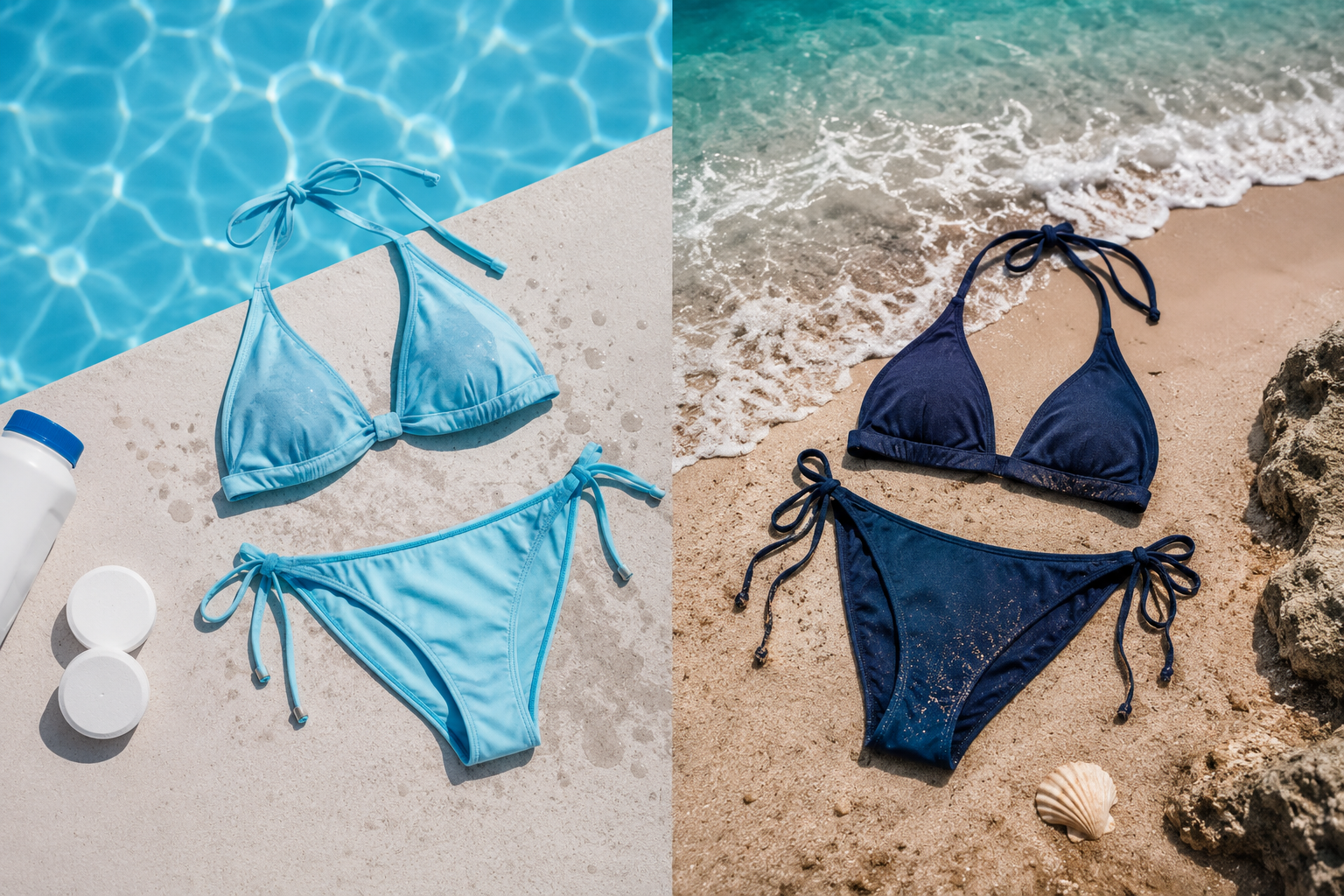
Chlorine vs Saltwater: Which Is Worse for Swimsuits?
If you swim often, chlorine is usually harder on swimwear than saltwater. Pool chemicals are designed to sanitize water, but they can also break down spandex, fade dyes, and make fabric feel rough over time. Saltwater is gentler in some ways, yet it can still dry out fabric and leave crystals behind when it evaporates.
The real damage often comes from repetition: swim, dry, wear again, and forget to rinse. A high-quality swimsuit can handle both pool days and beach trips, but it needs quick post-swim care.
Water Type | Main Risk | Best Protection |
|---|---|---|
Chlorine | Fading, elasticity loss, fiber breakdown | Rinse immediately, wash gently, avoid long soaking |
Saltwater | Dryness, salt residue, rough texture | Rinse with cool fresh water and air dry flat |
How Chlorine Affects Swimsuits
Chlorine damage to swimwear often shows up as faded color, stretched-out straps, thinning fabric, or a suit that no longer snaps back to the body. This is especially noticeable in fabrics with spandex or elastane, which give swimsuits their close, flexible fit.
Dark colors, bright neons, metallic finishes, and printed fabrics may fade faster with frequent pool use. White swimsuits can also discolor when chlorine interacts with sunscreen, body oils, or minerals in the water.
Common signs of chlorine damage
Color looks dull or uneven
Fabric feels brittle, thin, or scratchy
Elastic edges become loose
Straps stretch and do not recover
Lining starts to sag or wrinkle
For more detail on fabric performance and comfort, read SwimTailor’s guide to why swimsuit fabric matters .
How Saltwater Affects Swimwear
Saltwater damage to swimsuits is usually less chemical and more abrasive. When seawater dries on your suit, salt crystals can sit inside the fibers. That residue may make fabric feel stiff, pull moisture from elastic yarns, and create friction when the swimsuit rubs against skin, towels, or beach chairs.
Saltwater can also intensify other beach-related stressors. Sun exposure, sand, sunscreen, tanning oils, and heat all add up. A swimsuit worn at the beach may face more environmental wear than one worn briefly in a pool.
Common signs of saltwater damage
Fabric feels dry or rough after drying
Colors look faded from sun and salt exposure
Elastic edges feel less smooth
Sand or salt remains trapped in seams
Decorative trims become dull
How to Protect Swimwear from Chlorine
To protect swimwear from chlorine, focus on reducing how much chemical water the fabric absorbs and how long chlorine stays in the fibers.
Rinse before swimming. A quick shower helps the fabric absorb clean water first, leaving less room for chlorinated water.
Rinse immediately after swimming. Do not let chlorine dry into the suit.
Wash with mild soap. Use a gentle swimwear-safe detergent or mild hand soap.
Skip the washing machine when possible. Agitation can stretch elastic and damage delicate finishes.
Air dry away from direct sun. Heat and UV exposure can speed up fading and elasticity loss.
If you swim in pools several times a week, consider rotating between two or three swimsuits. Giving each suit time to fully dry helps preserve stretch and shape.
How to Protect Swimsuits from Saltwater
To protect swimsuits from saltwater, rinse away salt before it dries into the fabric. This is especially important after beach vacations, boat days, and long periods of lounging in the sun.
Rinse with cool fresh water. Hot water can be harsh on elastic fibers.
Gently press out water. Do not wring or twist the swimsuit.
Remove sand carefully. Let the suit dry, then shake out remaining grains before washing.
Wash after heavy beach use. Sunscreen, oils, salt, and sweat should not sit in the fabric overnight.
Dry flat in shade. Hanging a wet suit can stretch straps and leg openings.
For a deeper routine, see SwimTailor’s complete guide on how to wash swimwear properly .
Best Swimsuit Care Tips After Swimming
Good swimsuit fabric care does not need to be complicated. The most important habit is simple: rinse after every swim. Pool water, ocean water, sunscreen, sweat, and body oils all become harder to remove the longer they sit.
A simple post-swim routine
Rinse the swimsuit in cool fresh water as soon as possible.
Use a small amount of mild soap after chlorine, sunscreen, or heavy beach exposure.
Press water out with a towel instead of twisting the fabric.
Lay the suit flat to dry in a shaded, ventilated area.
Store only when fully dry to avoid odor and mildew.
Avoid bleach, fabric softener, tumble drying, ironing, and drying over radiators or balcony rails in direct sun. These shortcuts can shorten the lifespan of swimwear more than the swim itself.
Does Fabric Quality Make a Difference?
Yes. Better swimwear fabrics, linings, elastic, and construction can improve durability, comfort, and shape retention. A well-designed swimsuit should balance stretch, recovery, opacity, softness, and support. This matters for both bikinis and one-piece swimsuits, especially if you swim often or want a more personalized fit.
Custom swimwear can also help because fit affects longevity. If a swimsuit is too tight, seams and elastic are under constant stress. If it is too loose, fabric can drag, rub, and stretch unevenly. SwimTailor’s custom swimwear options are designed around personal fit, style, and wear needs.
How to Make Swimsuits Last Longer
The best way to make swimsuits last longer is to treat them like performance garments, not ordinary laundry. Swimwear has to stretch, recover, resist water exposure, and stay comfortable against the skin.
Rotate suits if you swim often.
Choose darker or more stable colors for frequent pool use.
Rinse before and after swimming.
Hand wash gently after chlorine or saltwater exposure.
Keep swimsuits away from rough pool edges and textured lounge chairs.
Apply sunscreen before putting on your suit when possible, and let it absorb before swimming.
Pack wet swimsuits loosely and wash them as soon as you get home.
If you are choosing between silhouettes, explore SwimTailor’s bikini swimwear and one-piece swimwear collections for made-to-fit options.
FAQ: Chlorine, Saltwater, and Swimsuit Care
Is chlorine or saltwater worse for swimsuits?
Chlorine is usually worse for swimsuit elasticity and color because it can break down fibers and dyes over time. Saltwater is less chemically aggressive, but it can still dry out fabric and leave abrasive residue.
Should I wash my swimsuit after every swim?
Yes. At minimum, rinse it with cool fresh water after every swim. After pool swimming, heavy sunscreen use, or a beach day, hand wash it gently with mild soap.
Can I put my swimsuit in the washing machine?
Hand washing is safer. If you must use a washing machine, place the swimsuit in a mesh bag, use cold water, choose a delicate cycle, and avoid the dryer.
How do I dry a swimsuit without stretching it?
Press out extra water with a towel, then lay the swimsuit flat in shade. Avoid wringing, tumble drying, or hanging a soaking-wet suit by its straps.
How long should a swimsuit last?
It depends on fabric quality, fit, frequency of use, and care habits. A suit worn occasionally and rinsed properly can last much longer than one exposed to chlorine, salt, sun, and heat without regular care.
Final Takeaway
In the chlorine vs saltwater swimsuit debate, chlorine tends to cause more direct damage to color and elasticity, while saltwater creates dryness and residue that can wear fabric down gradually. The best protection is consistent care: rinse quickly, wash gently, dry flat, and avoid heat. With those habits, your favorite bikini or one-piece can keep its shape, color, and comfort through many more swims.