Learn the right way to dry your swimsuit without damaging elasticity. Expert care tips to extend swimwear life — from custom swimwear tailors at SwimTailor.
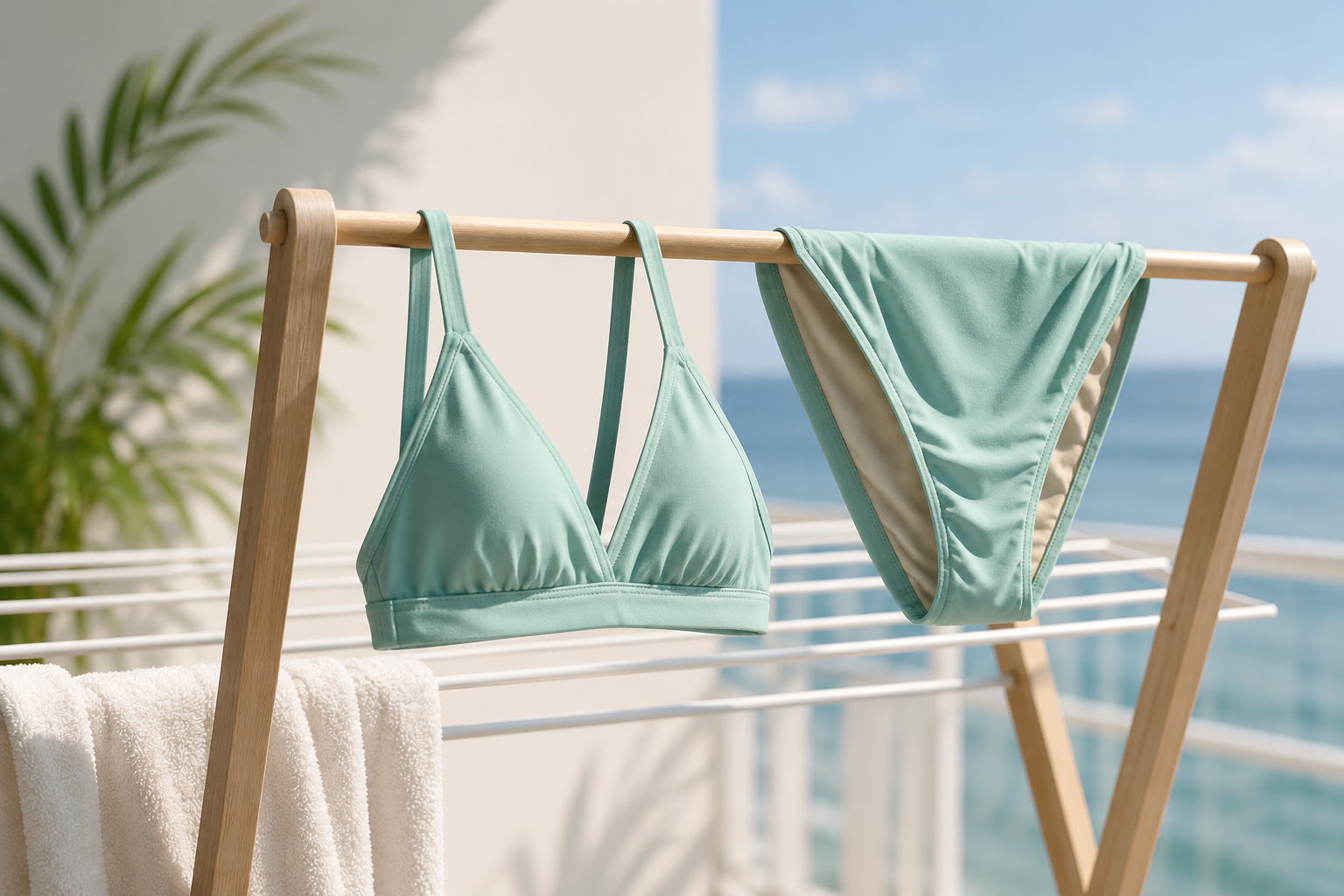
Why Drying Matters for Swimwear Elasticity
Swimwear is built from stretch fabrics, usually blends of nylon, polyester, spandex, or elastane. These fibers are designed to recover after movement, but they are sensitive to heat, harsh twisting, and prolonged exposure to chlorine, salt, sunscreen, and sunlight.
Poor drying habits can make a swimsuit lose its shape faster. Straps may lengthen, waistbands may ripple, leg openings may loosen, and the overall fit may stop feeling supportive. Good swimwear maintenance starts the moment you leave the water.
How to Dry a Swimsuit the Right Way
1. Rinse the Swimsuit First
Before drying, rinse your swimsuit in cool, clean water. This helps remove chlorine, salt, sweat, sunscreen, and body oils that can weaken elastic fibers and dull the fabric.
2. Press Out Water Gently
Never twist or wring a swimsuit. Wringing puts uneven stress on the elastic yarns and can distort the shape. Instead, press the fabric gently between your hands or roll it inside a clean towel to absorb excess moisture.
3. Lay It Flat on a Towel
The best answer to how to dry bathing suits is to lay them flat. Place the swimsuit on a dry towel, smooth out wrinkles, and reshape the cups, straps, waistband, and leg openings. This helps prevent swimwear from stretching while it dries.
4. Dry in the Shade
Air dry your swimsuit in a shaded, well-ventilated area. Direct sunlight may feel convenient, but strong UV exposure can fade colors and gradually weaken stretch fibers.
5. Flip It Once
After one side feels mostly dry, turn the swimsuit over so the other side can dry evenly. This is especially helpful for lined one-piece swimsuits, padded bikini tops, and thicker performance fabrics.
Care Tip
If you swim often, rotate between two or more swimsuits. Elastic fibers need time to recover between wears, especially after chlorine exposure.
What Not to Do When Drying Swimwear
-
Do not use a dryer. Heat can damage spandex and reduce elasticity.
-
Do not wring the swimsuit. Twisting can stretch seams, straps, and leg openings.
-
Do not hang it by the straps. Wet fabric is heavier and can pull the suit out of shape.
-
Do not dry it in direct sun for hours. UV exposure can fade colors and weaken fibers.
-
Do not leave it wet in a bag. Trapped moisture can cause odor, mildew, and fabric stress.
-
Do not iron swimwear. High heat can permanently damage stretch fabric.
Flat Drying vs. Hanging: Which Is Better?
|
Drying Method |
Effect on Swimwear |
Best Use |
|---|---|---|
|
Flat drying |
Helps protect shape and elasticity |
Best for all swimsuits |
|
Hanging by straps |
May stretch straps and neckline |
Avoid when wet |
|
Tumble drying |
Heat can damage elastic fibers |
Not recommended |
|
Direct sun drying |
May fade color and weaken stretch |
Use only briefly if necessary |
How to Dry Swimwear While Traveling
Travel often makes swimsuit care harder, but a few small habits can help extend swimsuit lifespan. Rinse your swimsuit in a hotel sink with cool water, press it inside a towel, then lay it flat near airflow. If you need to pack it before it is fully dry, place it in a breathable pouch rather than sealing it in plastic for hours.
Avoid drying swimsuits on balcony railings in harsh sun or clipping them tightly with rough clothespins. Clips can leave pressure marks, and railings may expose the fabric to heat, dirt, or abrasive surfaces.
Extra Swimsuit Care Tips to Extend Its Lifespan
-
Rinse immediately after swimming whenever possible.
-
Hand wash with mild detergent instead of using harsh laundry products.
-
Avoid soaking swimwear for too long, especially in hot water.
-
Keep swimsuits away from rough pool edges, rocks, and textured lounge chairs.
-
Store completely dry swimwear flat or lightly folded.
-
Rotate suits if you swim several times a week.
For more detailed washing advice, read this guide on how to wash swimwear properly . If fabric comfort and durability matter to you, this article on swimsuit fabric durability and comfort is also useful.
Does Drying Method Change by Swimsuit Type?
The basic rule stays the same for bikinis, one-piece swimsuits, tankinis, and performance swimwear: rinse, press, reshape, and dry flat in the shade. However, some designs need extra care.
-
Padded bikini tops: reshape cups before drying so they do not crease.
-
One-piece swimsuits: dry flat to protect the torso length and leg openings.
-
Strappy designs: arrange straps neatly so they do not twist or stretch.
-
High-compression swimwear: avoid heat completely to preserve recovery and support.
If you are choosing a new suit, made-to-measure custom swimwear can help improve fit from the start, while proper drying helps keep that fit intact.
FAQ: How to Dry Swimwear
Can I put a swimsuit in the dryer?
No. A dryer can expose swimwear to heat that weakens elastic fibers and damages stretch recovery. Air drying is much safer.
Is it bad to hang a swimsuit to dry?
Hanging a damp swimsuit by the straps can stretch it. If you must hang it, drape it evenly over a wide bar after pressing out most of the water, but flat drying is better.
How long does a swimsuit take to air dry?
Most swimsuits dry within several hours, depending on fabric thickness, lining, humidity, and airflow. Padded tops and lined one-piece swimsuits usually take longer.
Should I dry swimwear in the sun?
Short exposure is usually not disastrous, but repeated direct sunlight can fade color and weaken stretch fibers. Shade drying is better for long-term care.
How do I prevent swimwear from stretching?
Avoid wringing, heat, hanging while wet, and leaving the suit damp in a bag. Rinse after use, press gently, reshape, and dry flat.
Conclusion
The best way to dry swimwear is gentle, low-heat, and shape-conscious: rinse it, press out water with a towel, lay it flat, reshape it, and let it dry in the shade. These simple swimsuit care tips help protect swimsuit elasticity, prevent stretching, preserve color, and extend swimsuit lifespan.
A swimsuit’s fit depends on both good design and good care. Treat the fabric gently after every swim, and it will keep its shape, support, and comfort much longer.