Learn how to keep your custom swimwear looking new after every swim. Discover the best rinsing, washing, drying, and storage tips to protect colors, elasticity, and fabric longevity.
Custom swimwear is made to fit your body, your style, and the way you actually move in and out of the water. Because the fit is more personal than a standard off-the-rack swimsuit, it is worth protecting the fabric, color, and shape after every swim.
Chlorine, saltwater, sunscreen, sweat, sand, heat, and rough surfaces can all shorten the life of a swimsuit. The good news is that a simple care routine can help your favorite piece stay smooth, supportive, and bright for much longer. If you are still choosing your ideal fit, the SwimTailor Fit Guide is a helpful place to start.
Rinse Your Swimwear Right Away
The first step happens before laundry day. As soon as you leave the pool or ocean, rinse your swimsuit with cool, clean water. This helps remove chlorine, salt, sunscreen, and body oils before they settle into the fibers.
Do not use hot water. Heat can weaken elastic fibers and make the swimsuit lose its recovery faster. A quick rinse in cold water is especially important for fitted pieces, shaped cups, and suits with custom sizing details.
A quick cool-water rinse helps protect swimwear from salt, chlorine, and sunscreen buildup.
Hand Wash With a Gentle Cleanser
Hand washing is the safest method for custom swimwear. Fill a basin with cool water, add a small amount of mild soap, and gently press the swimsuit through the water. Avoid scrubbing the fabric against itself, especially around seams, straps, and decorative details.
Skip bleach, fabric softener, strong stain removers, and regular heavy-duty detergent. These products can break down stretch fibers and make colors look dull. For swimwear that needs a more flexible top-and-bottom fit, light custom swimwear can also make long-term comfort easier.
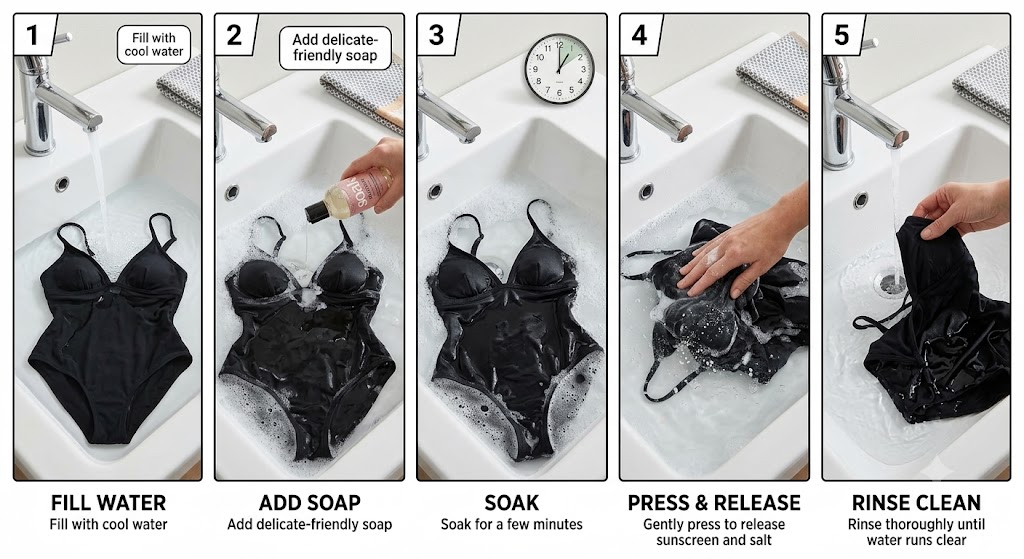
Simple hand-washing routine
-
Fill a clean basin with cool water.
-
Add a small amount of delicate-friendly soap.
-
Soak the swimsuit for a few minutes.
-
Gently press the fabric to release sunscreen and salt.
-
Rinse thoroughly until the water runs clear.
Never Twist or Wring the Fabric
Twisting a wet swimsuit may seem like the fastest way to remove water, but it can stretch the fabric unevenly and distort the shape. This is one of the easiest ways to damage a suit that otherwise still looks new.
Instead, lay the swimsuit flat on a clean towel, roll the towel gently, and press to absorb extra water. Then unroll it and move the swimsuit to a shaded drying spot.
Care tip: If your swimsuit starts feeling loose, transparent, or stretched out, compare it with these signs your swimsuit is too small or too big before deciding whether it needs better care or a better size.
Dry Flat in the Shade
Sunlight, dryers, radiators, and hair dryers can all damage swimwear. Heat weakens elasticity, while direct sun can fade colors faster. The best method is to dry your custom swimsuit flat in a shaded, well-ventilated place.
Avoid hanging wet swimwear by the straps. Water adds weight, and that weight can pull the straps longer over time. Drying flat helps the suit keep its original proportions.
Drying swimwear flat in the shade helps preserve color, shape, and stretch.
Rotate Between Swimsuits
If you swim often, avoid wearing the same swimsuit every day. Swimwear needs time to dry completely and recover its shape between uses. Rotating between two or three pieces helps each suit last longer.
For example, you might keep one supportive one-piece for lap swimming, one bikini for relaxing by the pool, and one vacation-ready look for travel. You can browse more fit-focused options in the SwimTailor custom swimwear .
Protect the Fabric From Rough Surfaces
Pool edges, stone benches, textured lounge chairs, wooden decks, and boat surfaces can snag or pill swimwear fabric. Always sit on a towel when possible, especially if your suit has a smooth finish, printed fabric, or delicate trim.
This small habit keeps the outside of the swimsuit looking polished. It also helps reduce friction in high-contact areas, such as the seat and hips.
Store Custom Swimwear the Right Way
Make sure your swimsuit is completely dry before storing it. Damp swimwear left in a gym bag or beach tote can develop odor and mildew. Once dry, fold it gently and store it flat in a drawer or breathable pouch.
Avoid crushing molded cups, tightly knotting straps, or leaving swimwear in direct sunlight near a window. Good storage is a quiet but important part of keeping your custom swimwear looking new.
Clean, dry swimwear should be stored gently so straps, cups, and fabric keep their shape.
Avoid the Washing Machine When Possible
Even a delicate cycle can be too harsh for swimwear. Machine agitation, spinning, and contact with other garments can stretch fabric, damage seams, and create pilling. Hand washing is the better choice for most custom swimsuits.
If you must use a machine, place the swimsuit in a mesh laundry bag, choose cold water, and use the gentlest cycle available. Never put swimwear in the dryer.
Final Thoughts
Keeping custom swimwear looking new is mostly about consistency. Rinse it quickly, wash it gently, dry it away from heat, rotate your suits, and protect the fabric from rough surfaces.
When a swimsuit is made to fit you well, careful maintenance helps preserve the confidence that made you choose it in the first place. For more practical style and fit advice, visit the SwimTailor blog or learn more about how to wash swimwear properly .
Related Guides